Research Proposes Hardware-Protected Keys for AI Agent Workflows
A new arXiv paper proposes moving AI-agent signing keys out of software-accessible storage and into hardware keystores protected by a layered zero-trust architecture.
Research Proposes Hardware-Protected Keys for AI Agent Workflows
As AI agents move from generating text to performing real operations, private keys used for signing and authentication become high-value security targets. A new arXiv paper by Leo Sambrook and Sampo Sovio, submitted on August 6, 2026, examines this problem from a practical security perspective.
The core idea
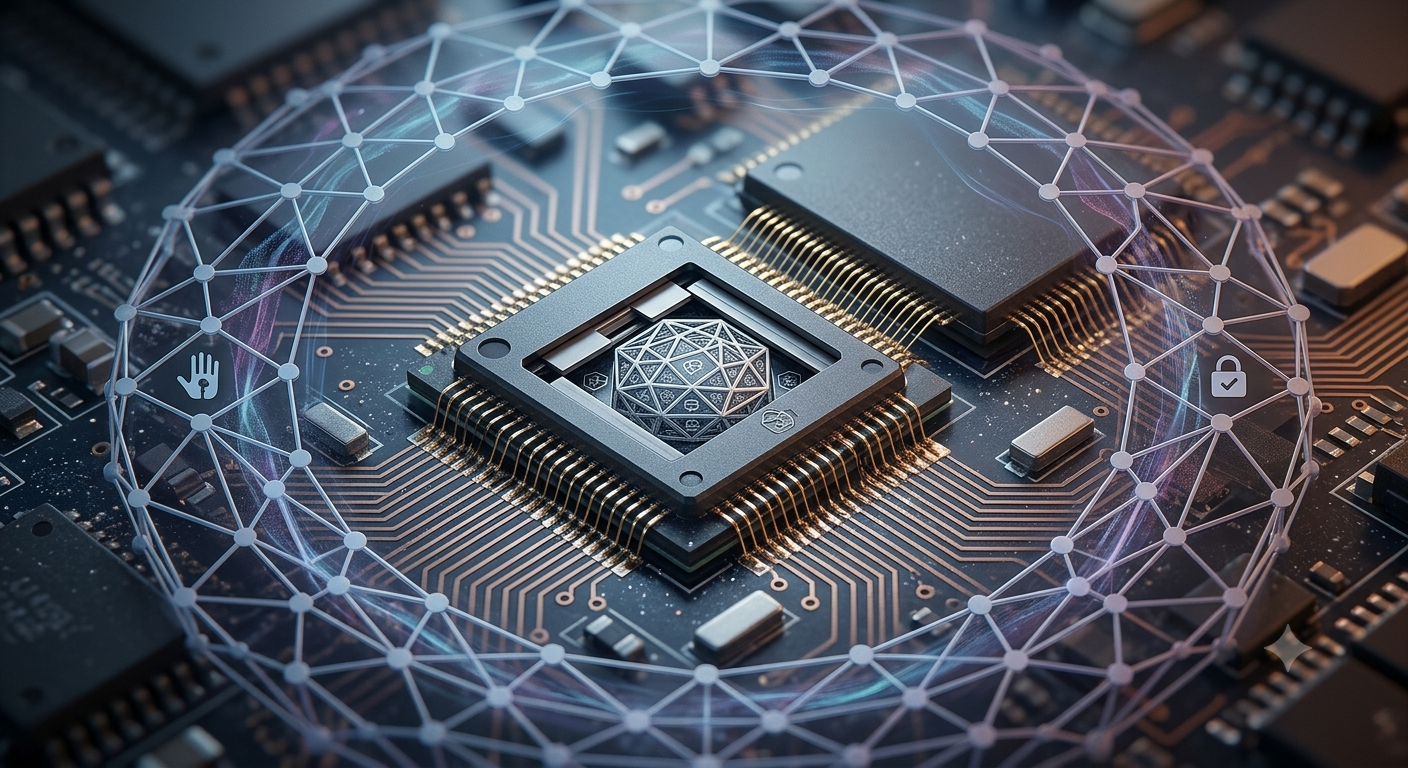
Instead of keeping private keys in files, environment variables, or container memory, the authors propose hardware-backed keystores such as HSMs or TPMs. Cryptographic operations happen inside the hardware boundary while the host receives only the result. The design is surrounded by zero-trust layers covering session identity, scope limits, and semantic validation.
The study evaluated 12 prompt-injection scenarios. In baseline mode, the combined attack success rate for models that followed injections was 19.3 percent. Under the protected architecture, the measured success rate fell to zero in the tested scenarios, with no false positives in the benign cases used. The paper is new, but it points to an important direction for securing agents with real authority.