Dr.Mohammed
HomeAboutSkillsResearchProjects & SystemsBlogContact
LogoDr.Mohammed

Dr. Mohammed Abduljaleel Shaneen — Ph.D. in Artificial Intelligence from the University of Technology (Researcher, Academic, and Software Developer)

TelegramInstagramGmail
© 2026 Dr. Mohammed Abduljaleel ShaneenAll rights reserved.

Scientific Research

Published Research Papers and Academic Work

Explore scientific publications, certificates, documents and verified academic profiles.

Research Profiles

Google ScholarDr. Mohammed Abduljaleel Shaneen
ResearchGateDr. Mohammed Abduljaleel Shaneen
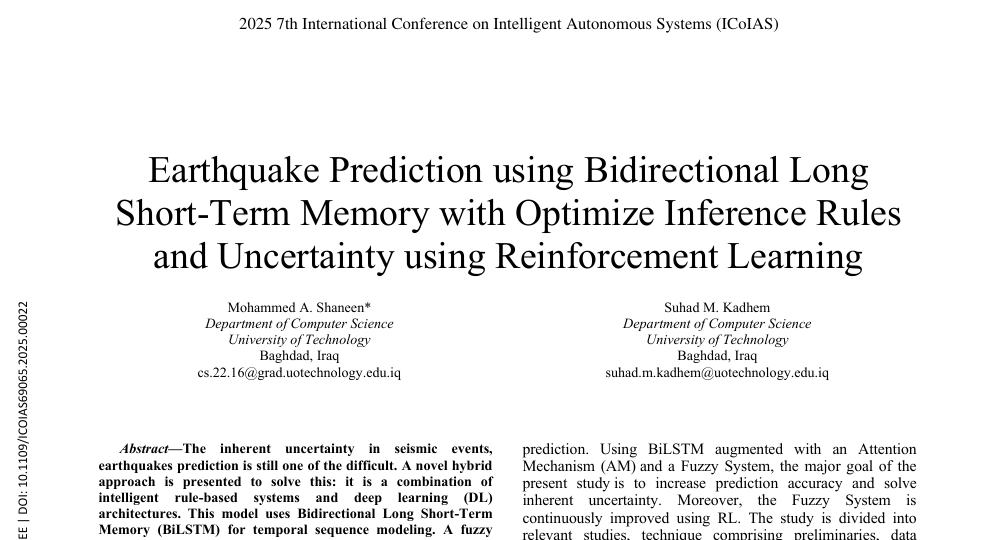
Earthquake Prediction Using Bidirectional Long Short-Term Memory with Optimize Inference Rules and Uncertainty Using Reinforcement Learning
Featured Research2025 7th International Conference on Intelligent Autonomous Systems (ICoIAS)

Earthquake Prediction Using Bidirectional Long Short-Term Memory with Optimize Inference Rules and Uncertainty Using Reinforcement Learning

The inherent uncertainty in seismic events, earthquakes prediction is still one of the difficult. A novel hybrid approach is presented to solve this: it is a combination of intelligent rule-based systems and deep learning (DL) architectures. This model uses Bidirectional Long Short-Term Memory (BiLSTM) for temporal sequence modeling. A fuzzy inference system (FIS) helps managing AND DEAL WITH prediction's uncertainty. Using a agent based on Q-learning, the fuzzy rule base is tuned dynamically for the purpose of increasing performance over time. The model has been trained on 11,442earthquake event dataset. Attaching a Mean Absolute Error (MAE) of 0.016, minimum Root Mean Squared Error (RMSE) of 0.021, and a R 2 score of 0.87 explaining 87% of the data variance, experimental findings show performance gains. These findings demonstrate the excellent ability regarding the proposed framework for controlling uncertainty, hence offering valuable information with regard to proactive risk reduction.

Research Details
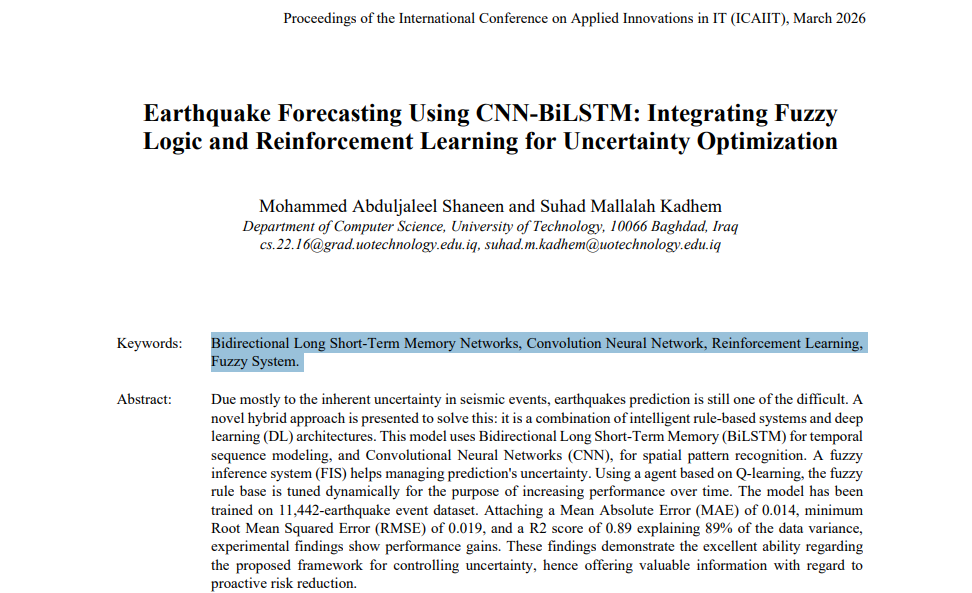
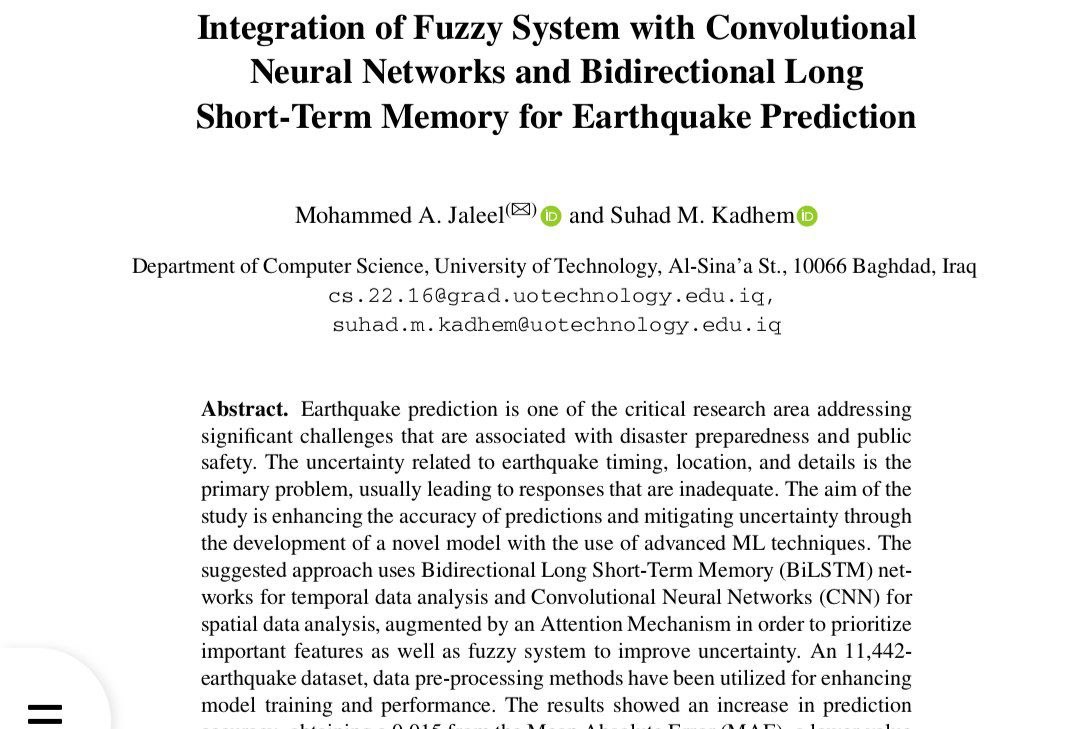
Earthquake Forecasting Using CNN-BiLSTM : Integrating Fuzzy Logic and Reinforcement Learning for Uncertainty Optimization
Featured ResearchInternational Conference on Applied Innovations in IT (ICAIIT)

Earthquake Forecasting Using CNN-BiLSTM : Integrating Fuzzy Logic and Reinforcement Learning for Uncertainty Optimization

Due mostly to the inherent uncertainty in seismic events, earthquakes prediction is still one of the difficult. A novel hybrid approach is presented to solve this: it is a combination of intelligent rule-based systems and deep learning (DL) architectures. This model uses Bidirectional Long Short-Term Memory (BiLSTM) for temporal sequence modeling, and Convolutional Neural Networks (CNN), for spatial pattern recognition. A fuzzy inference system (FIS) helps managing prediction's uncertainty. Using a agent based on Q-learning, the fuzzy rule base is tuned dynamically for the purpose of increasing performance over time. The model has been trained on 11,442-earthquake event dataset. Attaching a Mean Absolute Error (MAE) of 0.014, minimum Root Mean Squared Error (RMSE) of 0.019, and a R2 score of 0.89 explaining 89% of the data variance, experimental findings show performance gains. These findings demonstrate the excellent ability regarding the proposed framework for controlling uncertainty, hence offering valuable information with regard to proactive risk reduction.

Research Details
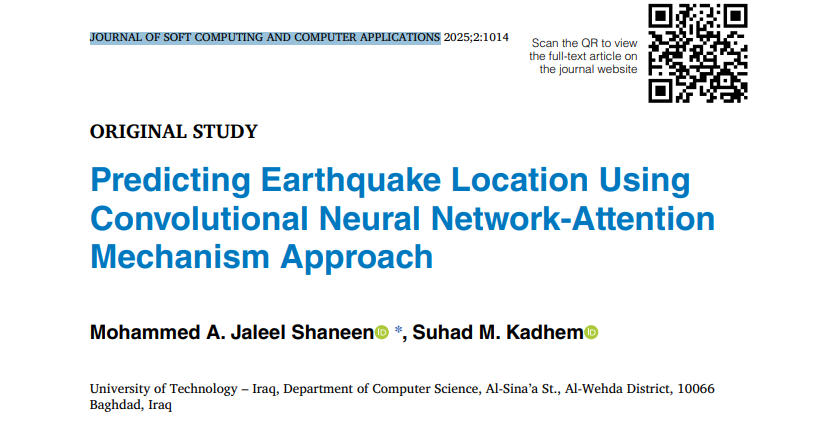
Predicting Earthquake Location Using Convolutional Neural Network-Attention Mechanism Approach
Featured ResearchJOURNAL OF SOFT COMPUTING AND COMPUTER APPLICATIONS

Predicting Earthquake Location Using Convolutional Neural Network-Attention Mechanism Approach

In seismically active areas, earthquake prediction is essential for minimizing potential damages and preserving lives. However, precise forecasts are complicated to achieve because of seismic events’ complex and unpredictable nature. The current study presents an advanced prediction approach to address such issues, combining Convolutional Neural Networks (CNNs) and Attention Mechanism (AM). The primary goal is to improve the accuracy of the earthquake predictions and the generalizability across various mainland Chinese regions. AM layer emphasizes significant features for improving the prediction performance, whereas CNNs are utilized to extract spatial features of seismic data. The efficiency and effectiveness of the proposed approach were evaluated by comparing it with several well-known models. Results showed that the proposed approach performed consistently better than others in nine regions, with a reduced Root Mean Square Error (RMSE) and Mean Absolute Error (MAE) as well as higher R-squared (R2) scores, especially in substantial seismic variability regions. Moreover, the proposed approach outperformed the conventional techniques in Region One, achieving an RMSE of 0.020, an MAE of 0.015, and an R2 value of 0.960. In regions susceptible to seismic events, this all-encompassing approach presents a promising path for earthquake prediction, boosting readiness and risk management methods.

Research Details
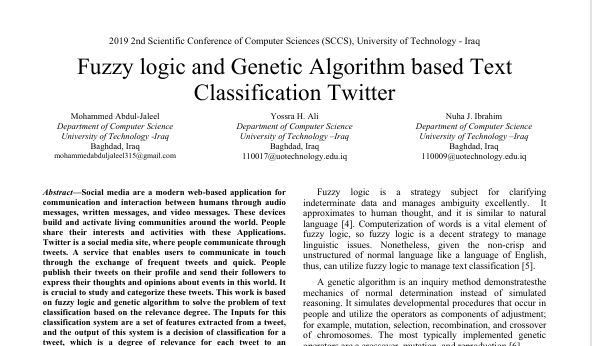
Fuzzy logic and Genetic Algorithm based Text Classification Twitter
Featured Research2019 2nd Scientific Conference of Computer Sciences (SCCS)

Fuzzy logic and Genetic Algorithm based Text Classification Twitter

Social media are a modern web-based application for communication and interaction between humans through audio messages, written messages, and video messages. These devices build and activate living communities around the world. People share their interests and activities with these Applications. Twitter is a social media site, where people communicate through tweets. A service that enables users to communicate in touch through the exchange of frequent tweets and quick. People publish their tweets on their profile and send their followers to express their thoughts and opinions about events in this world. It is crucial to study and categorize these tweets. This work is based on fuzzy logic and genetic algorithm to solve the problem of text classification based on the relevance degree. The Inputs for this classification system are a set of features extracted from a tweet, and the output of this system is a decision of classification for a tweet, which is a degree of relevance for each tweet to an appointed event where the degree of relevance to the desired event iftweet irrelevant or relevant. The results are compared with a method of keyword search and fuzzy logic, which is based on the method incremental rate and correction rate. In the incremental rate, the proposed system is able to extract tweets more than this method, wherein dataset 1, the number of the tweets that are extracted by the proposed system is 160 tweets, but the number of the tweets that extracted by the other one are 98 and141. The correction rate of the proposed system is (98.75), but the correction rates of this method are (97.9) and (95.7).

Research Details
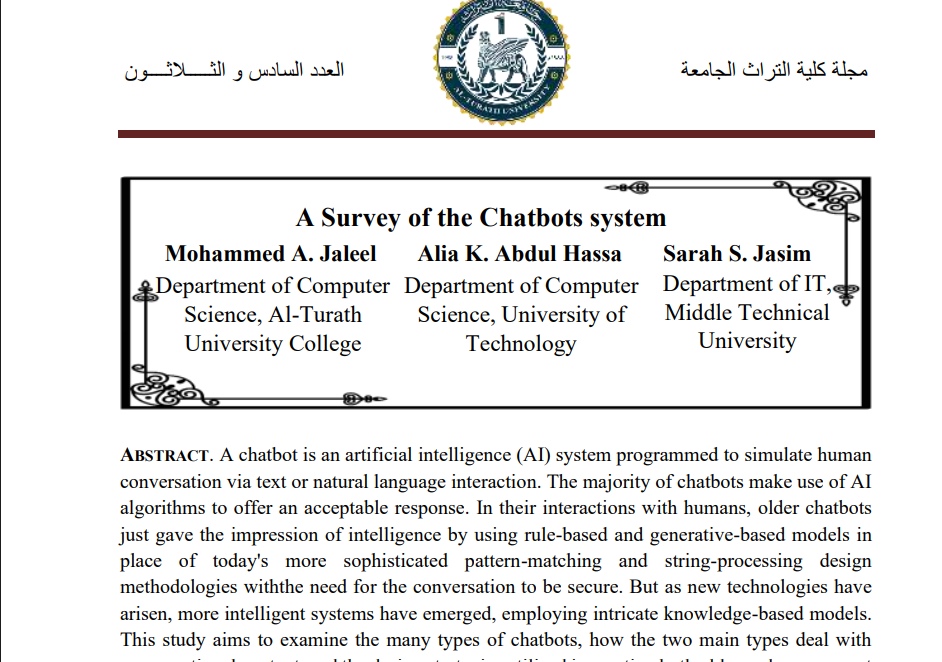
A Survey of the Chatbots system
Journal Of AL-Turath University College

A Survey of the Chatbots system

A chatbot is an artificial intelligence (AI) system programmed to simulate human conversation via text or natural language interaction. The majority of chatbots make use of AI algorithms to offer an acceptable response. In their interactions with humans, older chatbots just gave the impression of intelligence by using rule-based and generative-based models in place of today's more sophisticated pattern-matching and string-processing design methodologies with the need for the conversation to be secure. But as new technologies have arisen, more intelligent systems have emerged, employing intricate knowledge-based models. This study aims to examine the many types of chatbots, how the two main types deal with conversational context, and the design strategies utilized in creating both older and more recent chatbots.

Research Details
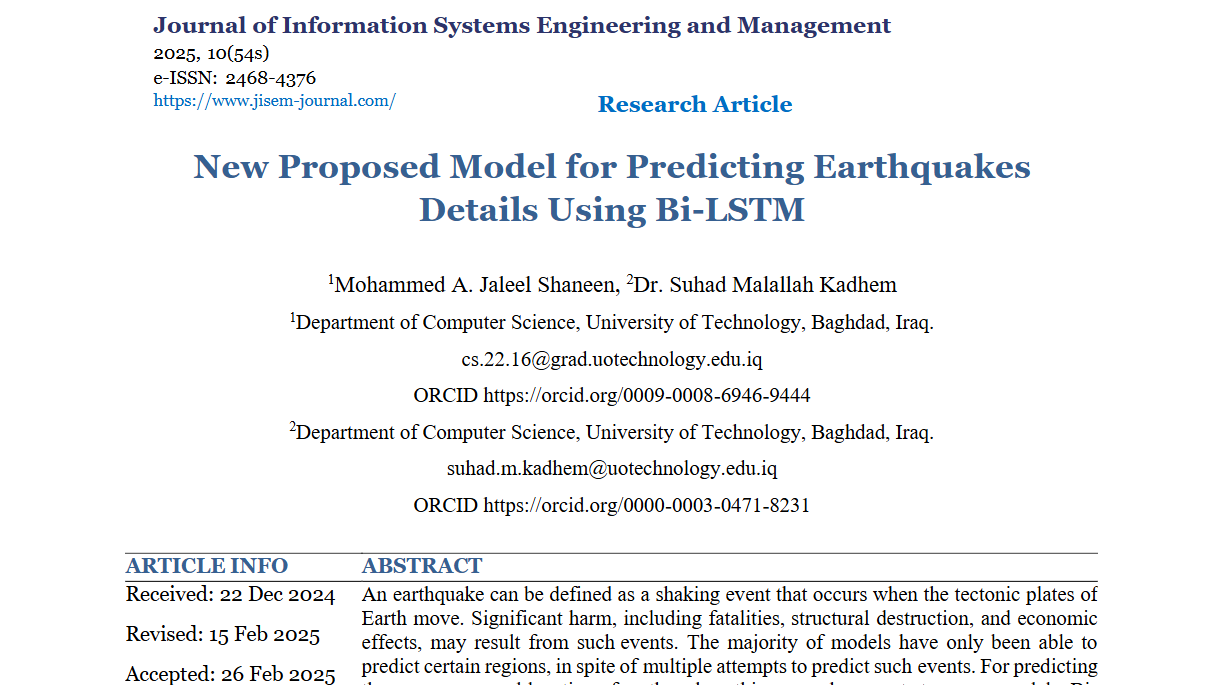
New Proposed Model for Predicting Earthquakes Details Using Bi-LSTM
Journal of Information Systems Engineering and Management

New Proposed Model for Predicting Earthquakes Details Using Bi-LSTM

An earthquake can be defined as a shaking event that occurs when the tectonic plates of Earth move. Significant harm, including fatalities, structural destruction, and economic effects, may result from such events. The majority of models have only been able to predict certain regions, in spite of multiple attempts to predict such events. For predicting the occurrence and location of earthquakes, this research presents two new models. Bi-directional Long Short-Term Memory (BiLSTM) networks were found to be very appropriate by reviewing the literature because of their efficient memory retention qualities. The best model has been selected by utilizing Keras tuner, which allowed for the selection of different dense layer combinations as well as BiLSTM configurations. The model of choice makes use of seismic markers from earthquake catalog of Bangladesh in order to predict the probability of earthquakes in the future month. An attention process has been incorporated into BiLSTM framework to improve prediction accuracy in the occurrence prediction model, yielding an accuracy rate of 80.1%. Also, an attention mechanism was not included in the location prediction model since it would not improve the performance of BiLSTM architecture and would just add needless complexity. Instead, a regression model has been created by using BiLSTM and dense layers for estimating earthquake epicenter relative to fixed point. Obtaining a root mean square error (RMSE) of 1.1830 as a result.

Research Details
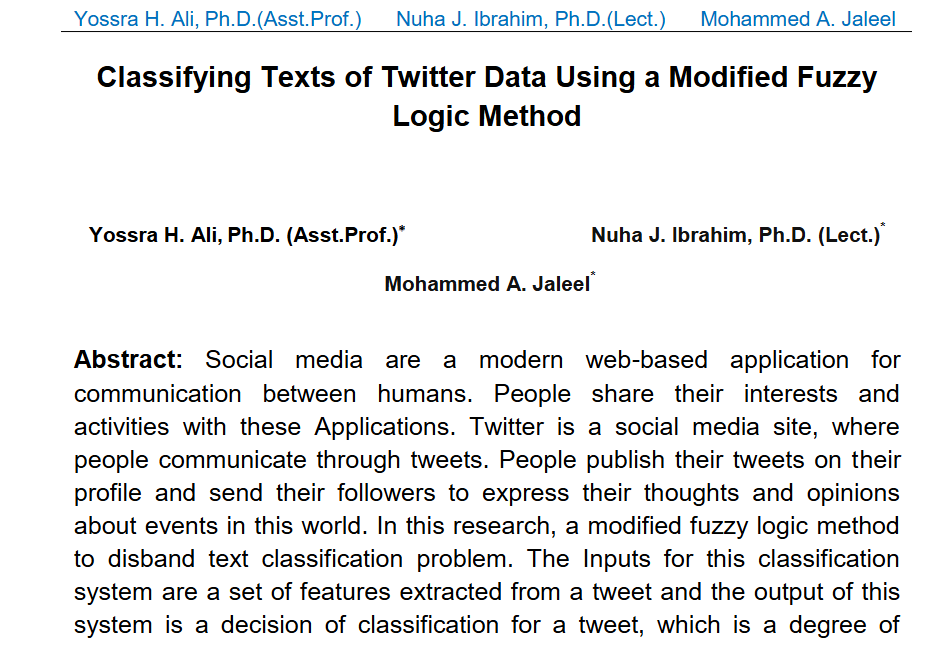
Classifying Texts of Twitter Data Using a Modified Fuzzy Logic Method
Al-Mansour Journal

Classifying Texts of Twitter Data Using a Modified Fuzzy Logic Method

Social media are a modern web-based application for communication between humans. People share their interests and activities with these Applications. Twitter is a social media site, where people communicate through tweets. People publish their tweets on their profile and send their followers to express their thoughts and opinions about events in this world. In this research, a modified fuzzy logic method to disband text classification problem. The Inputs for this classification system are a set of features extracted from a tweet and the output of this system is a decision of classification for a tweet, which is a degree of correlation for each tweet to an appointed event where the degree of relevance to the desired event if it irrelevant or relevant. The results compared with the keyword search method and the previous fuzzy logic based method based on terms of correction rate and incremental rate. In the incremental rate, the proposed system is able to extract tweets more than a previous fuzzy logic based method, where in dataset 1 the number of the tweets that extracted by the proposed system is 154tweets but the number of the tweets that extracted by the other one are 98 and 141. The correction rate of the proposed system is (98.7) but the correction rates of these methods are (97.9) and (95.7).

Research Details

Academic and Professional Certificates

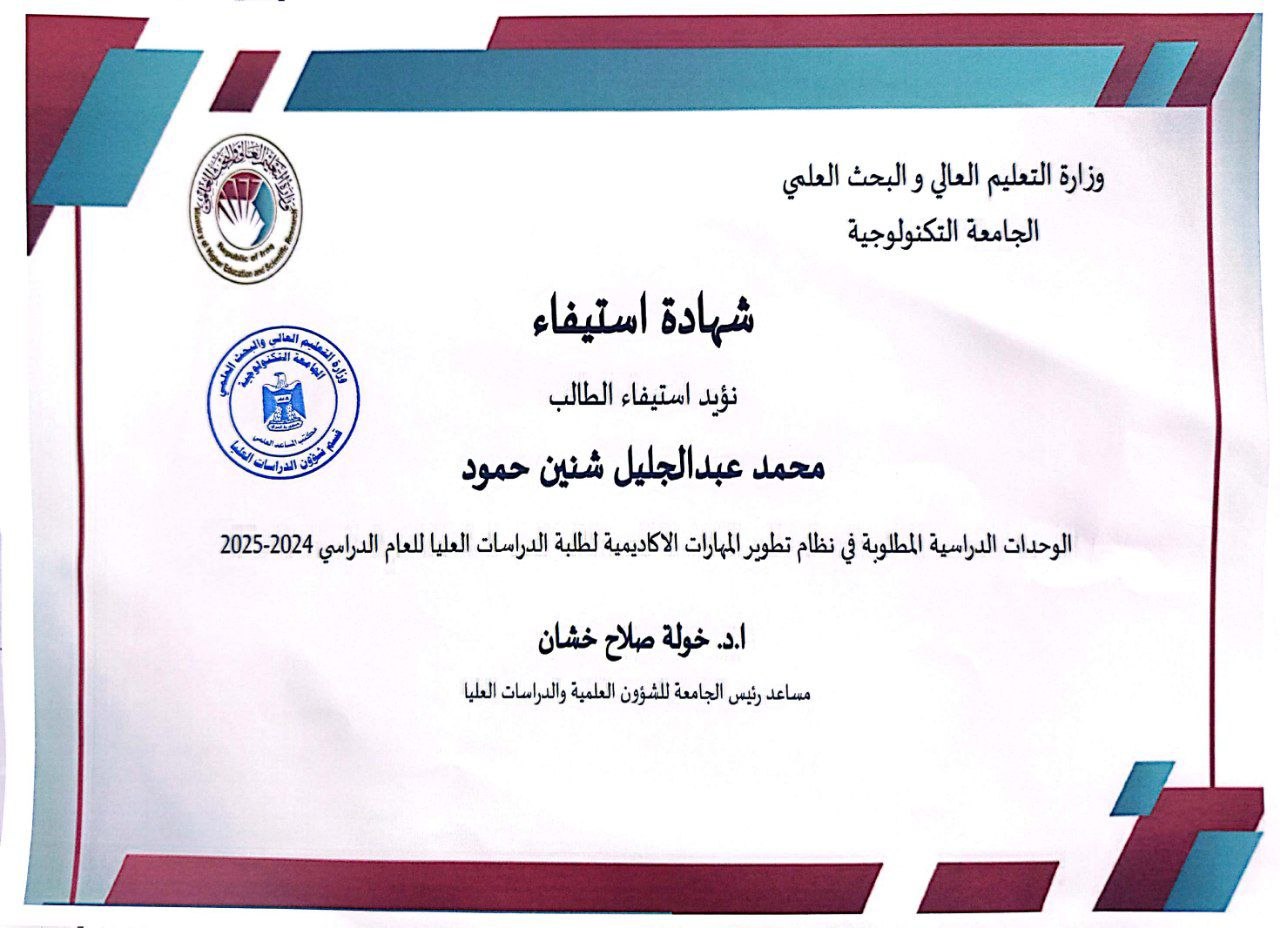
Certificate of Completion for Academic Skills Development Program Requirements for Postgraduate Students

Certificate of Completion for Academic Skills Development Program Requirements for Postgraduate Students

University of Technology - Department of Postgraduate Studies Affairs (Under the auspices of the Ministry of Higher Education and Scientific Research - Iraq).

A certificate of fulfillment issued by the University of Technology (Postgraduate Studies Department), certifying that the student Mohammed Abduljaleel Shannen Hamood has fulfilled the required course units in the Academic Skills Development System for postgraduate students for the academic year 2024–2025.

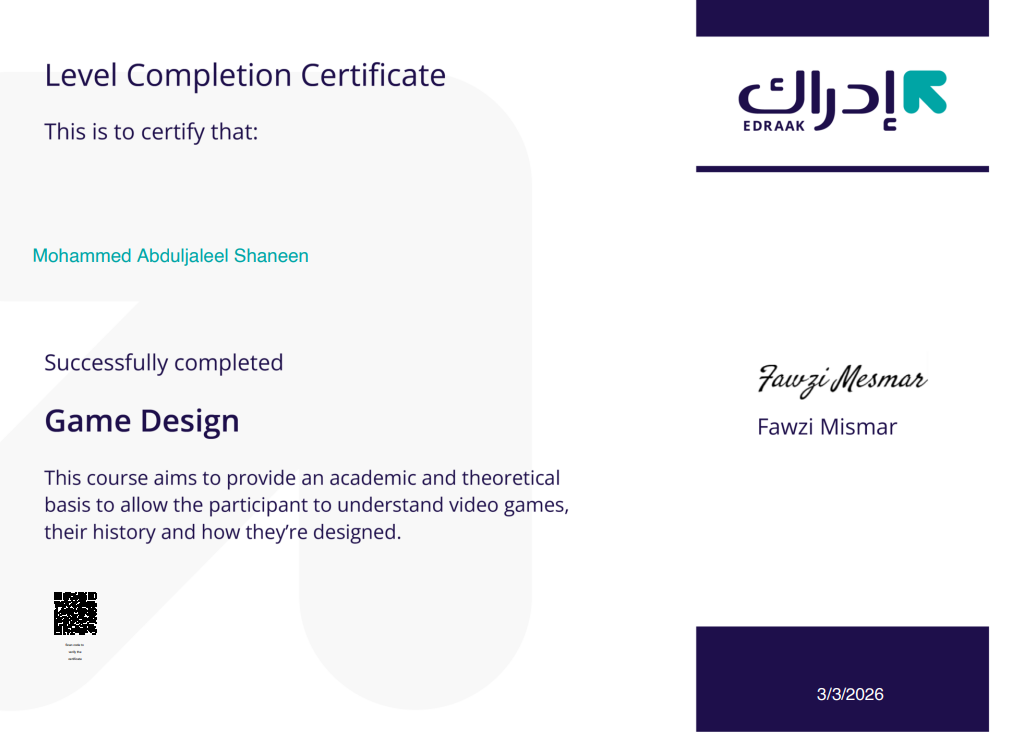
Level Completion Certificate - Game Design

Level Completion Certificate - Game Design

Edraak Platform - Instructed by Fawzi Mismar

Level completion certificate awarded to Mohammed Abduljaleel Shaneen for successfully completing the "Game Design" course on Edraak platform. This course aims to provide an academic and theoretical basis to allow the participant to understand video games, their history, and how they are designed.

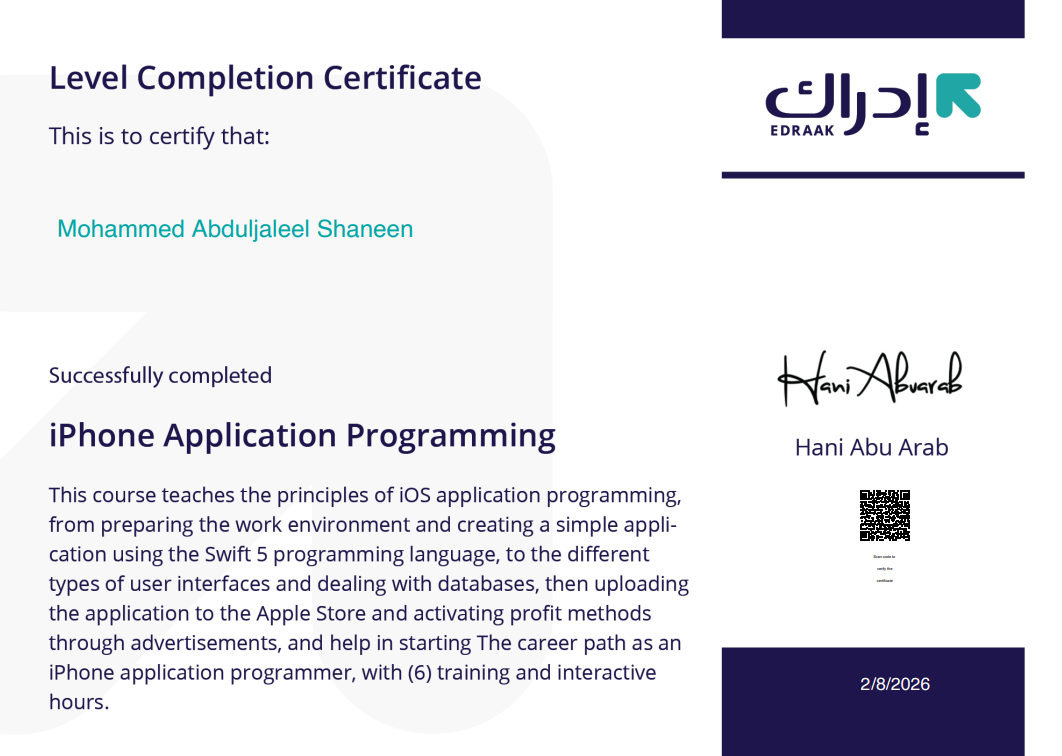
Certificate iPhone Application Programming

Certificate iPhone Application Programming

Edraak Platform - Instructed by Hani Abu Arab

Level completion certificate awarded to Mohammed Abduljaleel Shaneen for successfully completing the "iPhone Application Programming" course with six (6) hours of training and interactive learning on Edraak platform. This course teaches the principles of iOS application programming, from preparing the work environment and creating a simple application using Swift 5, to handling user interfaces, databases, uploading to the Apple Store, and activating monetization methods.

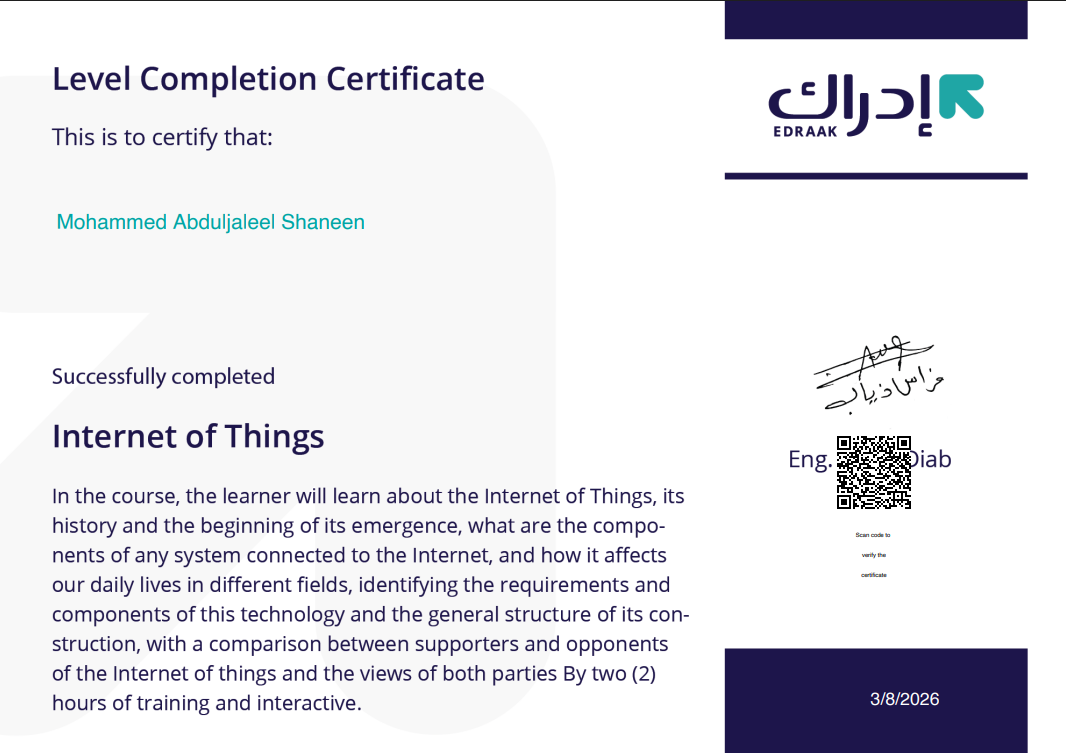
Level Completion Certificate - Internet of Things

Level Completion Certificate - Internet of Things

Edraak Platform - Instructed by Eng. Firas Diab

Level completion certificate awarded to Mohammed Abduljaleel Shaneen for successfully completing the "Internet of Things" course with two (2) hours of training and interactive learning on Edraak platform. In this course, the learner explores the Internet of Things, its history, emergence, system components connected to the Internet, its impact on daily life, requirements, general construction framework, and a comparison between supporters and opponents of IoT.

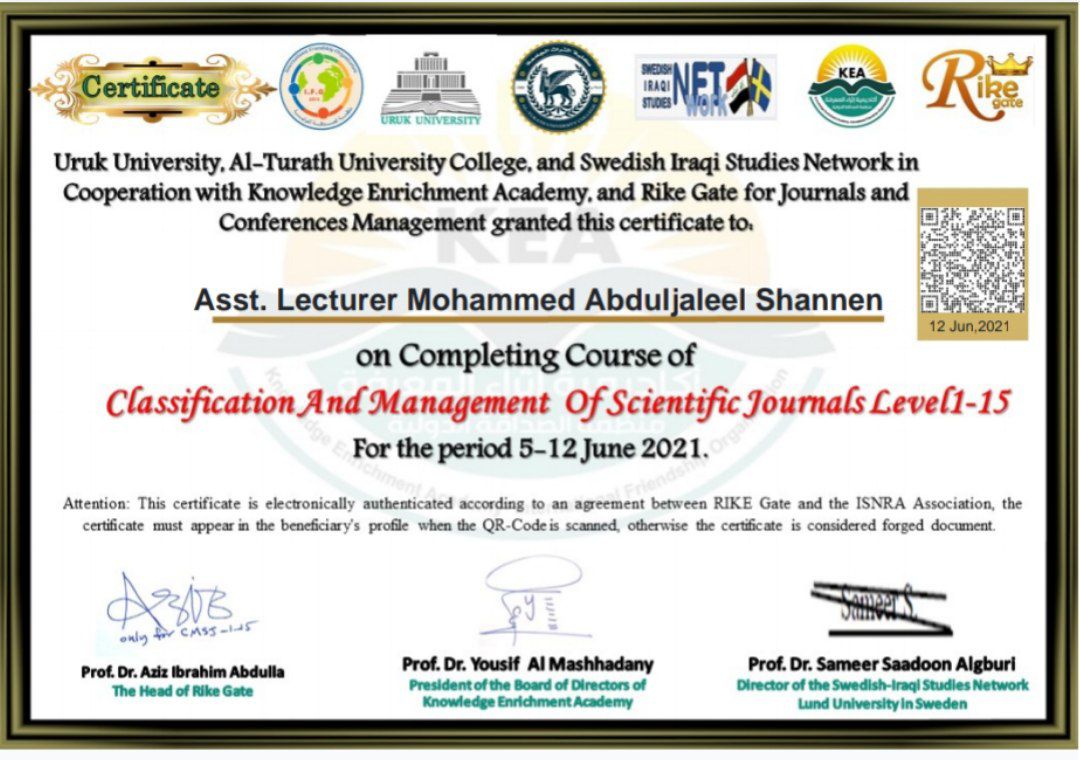
Certificate of Completing Course of Classification And Management Of Scientific Journals Level1-15

Certificate of Completing Course of Classification And Management Of Scientific Journals Level1-15

Swedish Iraqi Studies Network in Cooperation with Knowledge Enrichment Academy, and Rike Gate for Journals and Conferences Management.

This certificate was granted to Asst. Lecturer Mohammed Abduljaleel Shannen on completing the course of "Classification And Management Of Scientific Journals Level1-15" for the period 5–12 June 2021.

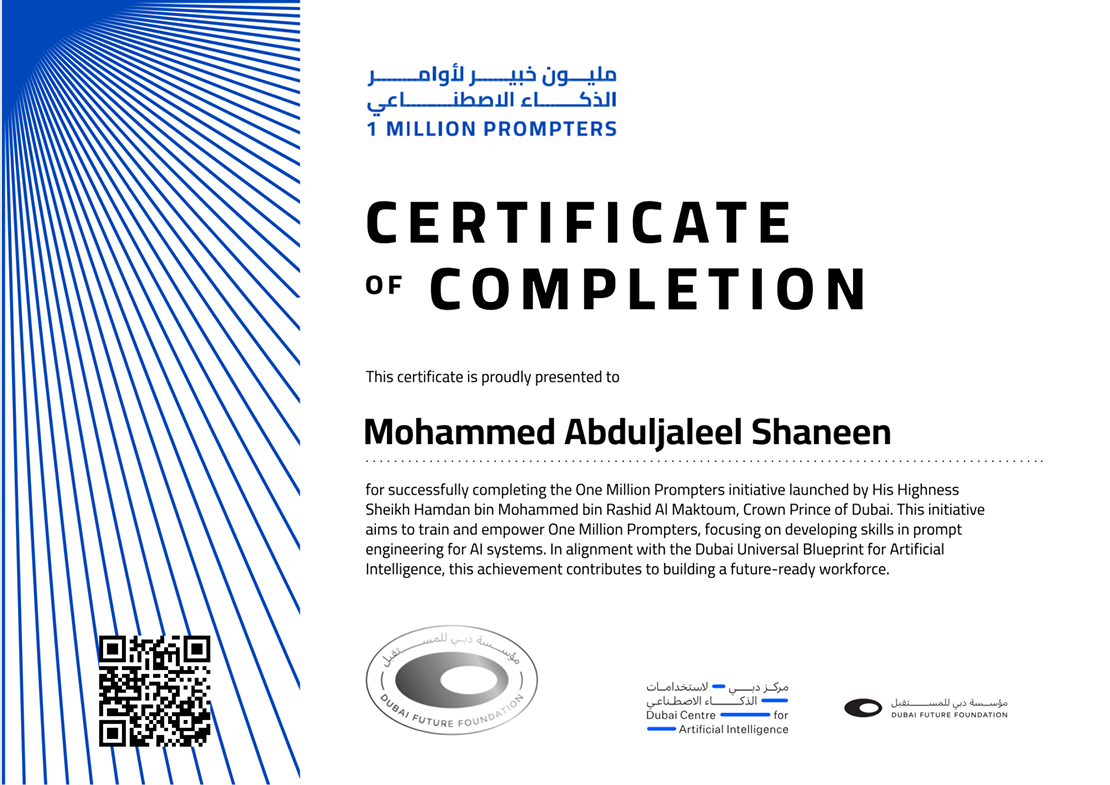
Certificate of Completion - 1 Million Prompters Initiative

Certificate of Completion - 1 Million Prompters Initiative

Dubai Future Foundation - Dubai Centre for Artificial Intelligence (DCAI), Dubai, UAE.

Certificate of Completion awarded to Mohammed Abduljaleel Shaneen for successfully completing the "One Million Prompters" initiative, launched by His Highness Sheikh Hamdan bin Mohammed bin Rashid Al Maktoum, Crown Prince of Dubai. The initiative focuses on prompt engineering skills for AI systems, aligned with the Dubai Universal Blueprint for Artificial Intelligence.

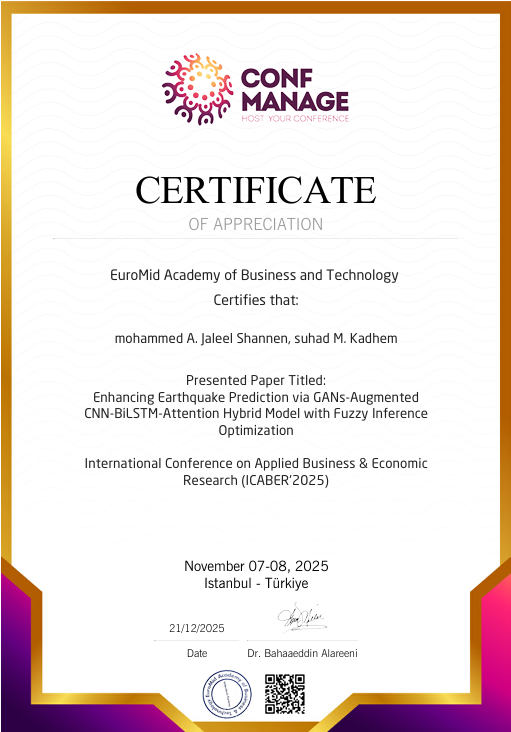
Certificate of Appreciation - International Conference on Applied Business & Economic Research (ICABER'2025)

Certificate of Appreciation - International Conference on Applied Business & Economic Research (ICABER'2025)

أكاديمية يورومايد للأعمال والتكنولوجيا - منصة إدارة المؤتمرات (ConfManage).

A Certificate of Appreciation issued by EuroMid Academy of Business and Technology, certifying that mohammed A. Jaleel Shannen and suhad M. Kadhem presented a paper titled "Enhancing Earthquake Prediction via GANs-Augmented CNN-BiLSTM-Attention Hybrid Model with Fuzzy Inference Optimization" at the International Conference on Applied Business & Economic Research (ICABER'2025), held in Istanbul, Türkiye, on November 07-08, 2025.

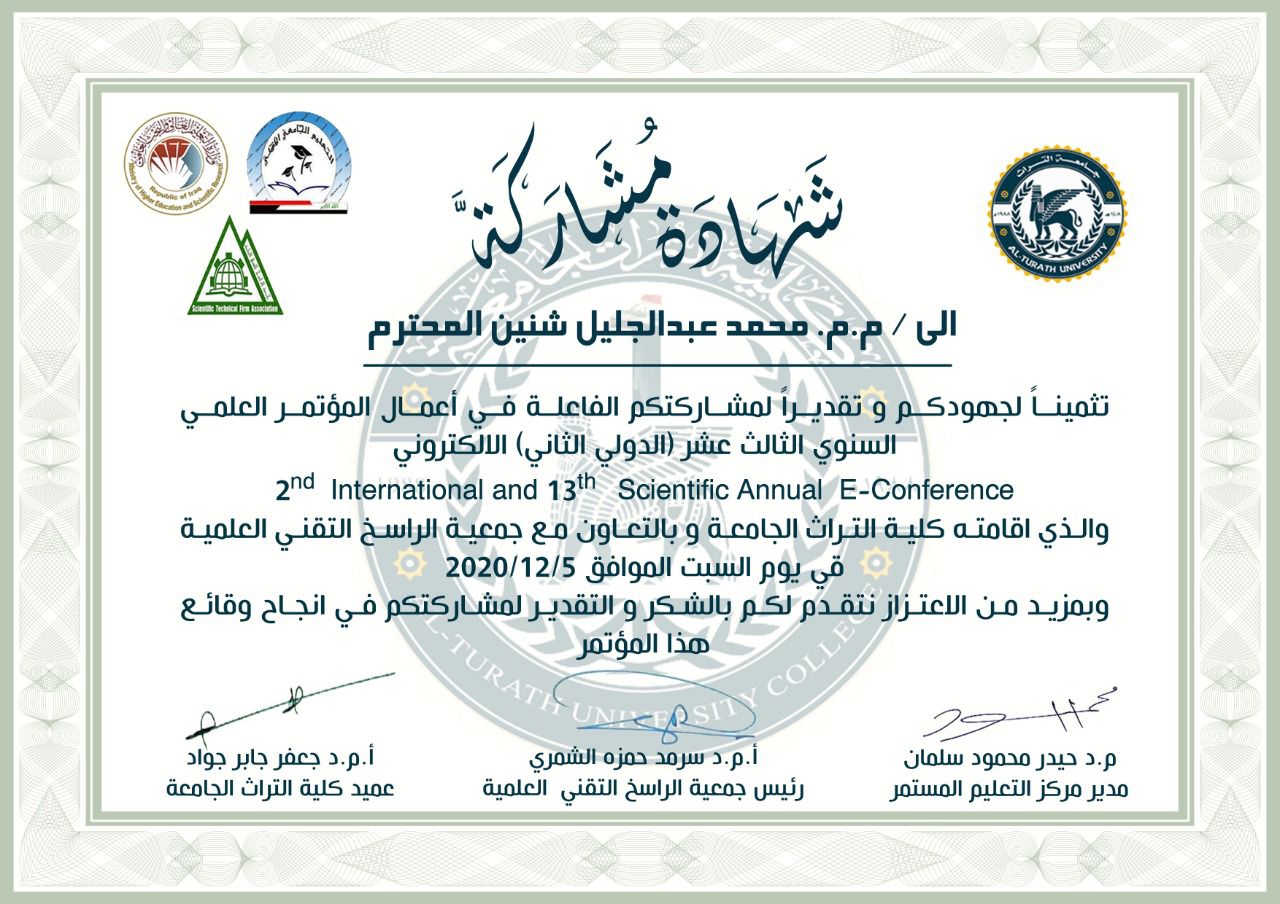
Certificate of Participation in the 2nd International and 13th Scientific Annual E-Conference

Certificate of Participation in the 2nd International and 13th Scientific Annual E-Conference

Al-Turath University College in cooperation with the Scientific Technical Firm Association (Under the auspices of the Ministry of Higher Education and Scientific Research - Iraq).

Certificate of participation awarded to Asst. Lecturer Mohammed Abduljaleel Shannen for his active contribution to the successful organization of the 2nd International and 13th Scientific Annual E-Conference, organized by Al-Turath University College in cooperation with the Scientific Technical Firm Association on December 5, 2020.

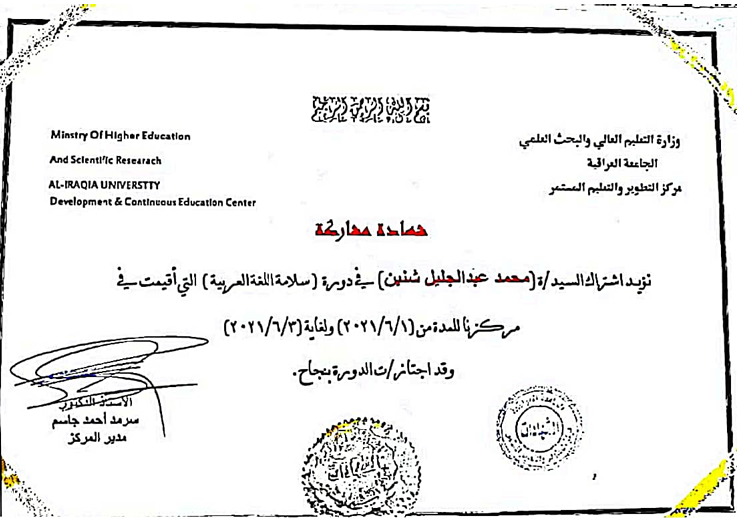
Certificate of Participation in Arabic Language Soundness Course

Certificate of Participation in Arabic Language Soundness Course

Al-Iraqia University - Development & Continuous Education Center (Under the auspices of the Ministry of Higher Education and Scientific Research - Iraq).

Certificate of participation issued by the Development and Continuous Education Center at Al-Iraqia University, certifying that Mr. Mohammed Abduljaleel Shannen successfully completed the course on "Arabic Language Soundness", held from June 1, 2021, to June 3, 2021.

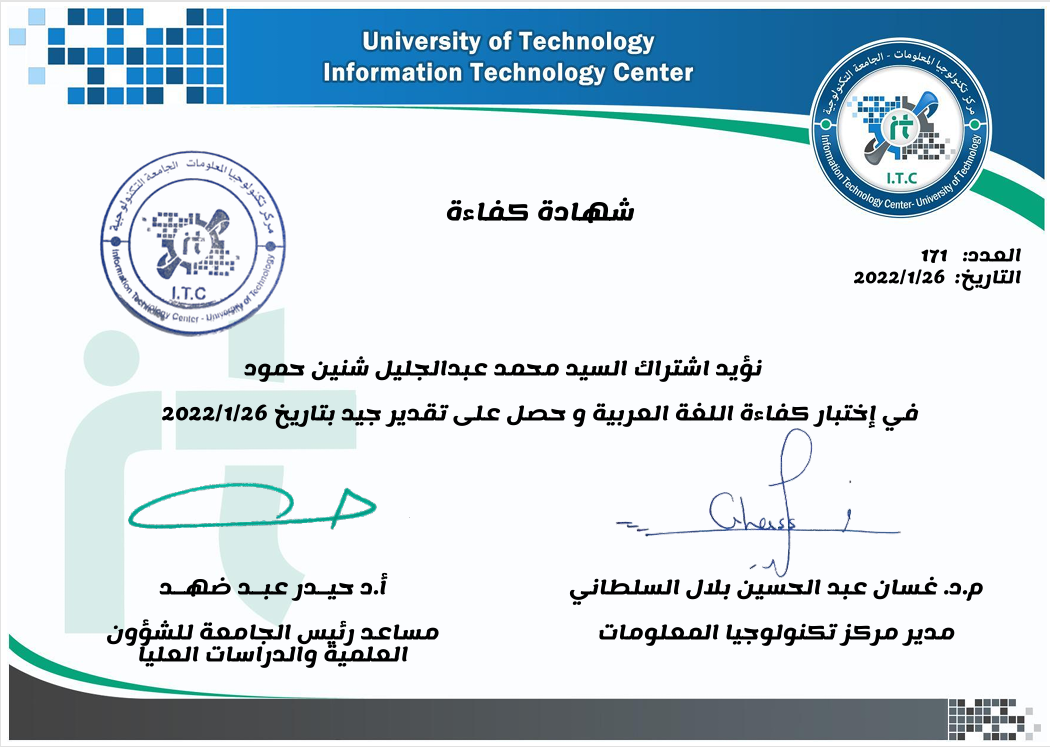
Certificate of Proficiency in Arabic Language Proficiency Test

Certificate of Proficiency in Arabic Language Proficiency Test

University of Technology - Information Technology Center (Ref No.: 171).

Certificate of proficiency issued by the Information Technology Center at the University of Technology, certifying that Mr. Mohammed Abduljaleel Shannen Hamood completed the Arabic Language Proficiency Test on January 26, 2022, with a grade of "Good".

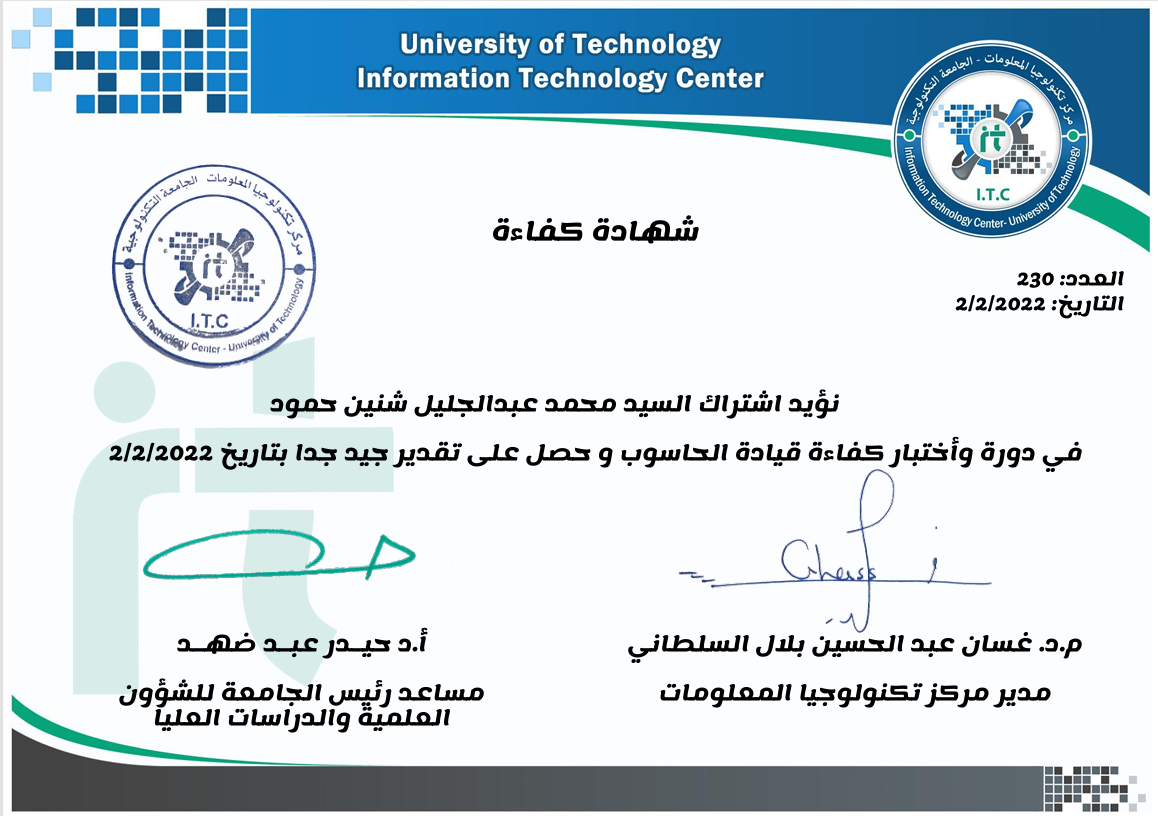
Certificate of Proficiency in Computer Driving Proficiency Course and Test

Certificate of Proficiency in Computer Driving Proficiency Course and Test

University of Technology - Information Technology Center (Ref No.: 230).

Certificate of proficiency issued by the Information Technology Center at the University of Technology, certifying that Mr. Mohammed Abduljaleel Shannen Hamood completed the Computer Driving Proficiency Course and Test on February 2, 2022, with a grade of "Very Good".

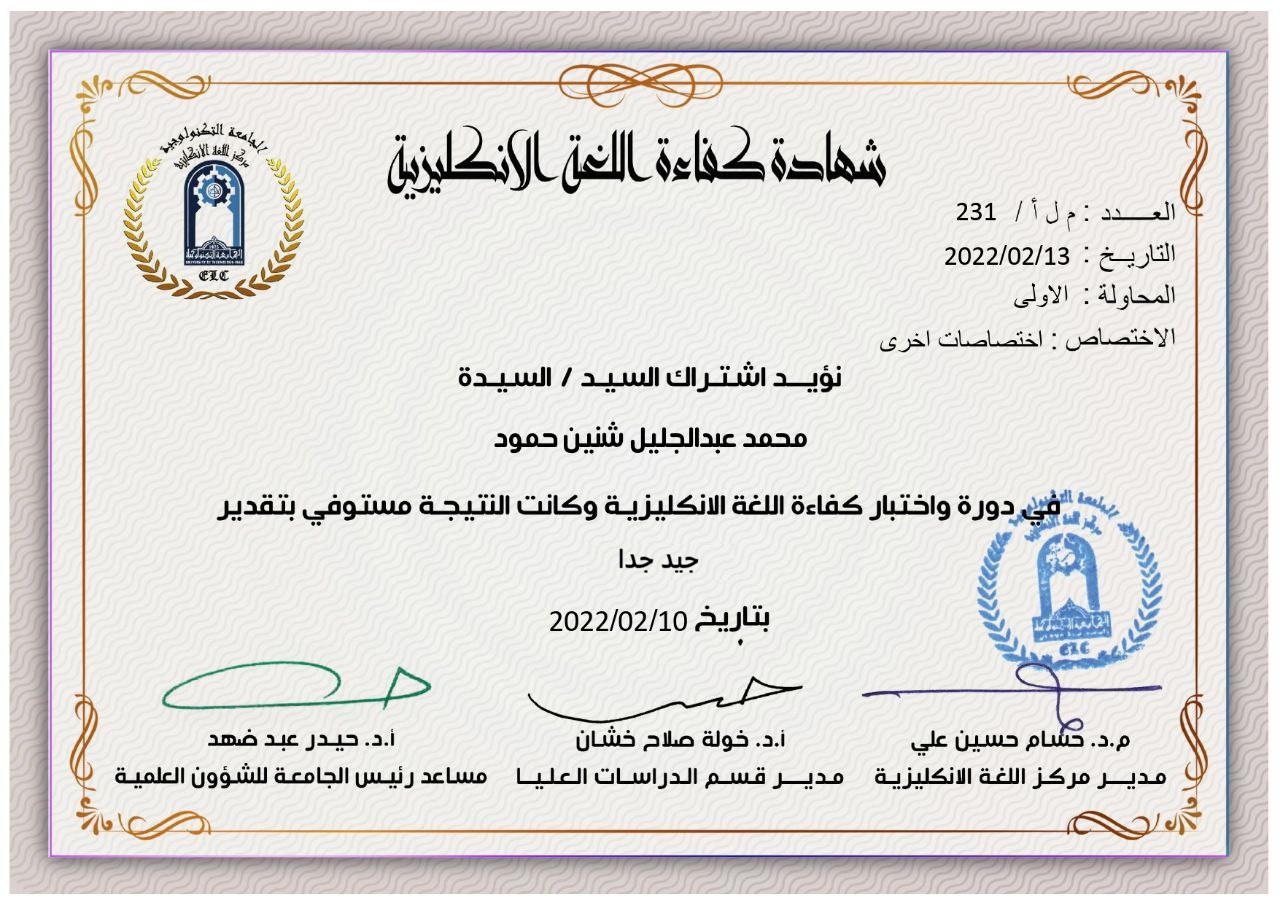
Certificate of English Language Proficiency

Certificate of English Language Proficiency

University of Technology - English Language Center (Ref No.: ELC / 231).

Certificate of English Language Proficiency issued by the English Language Center at the University of Technology, certifying that Mr. Mohammed Abduljaleel Shannen Hamood completed the English Language Proficiency course and test on February 10, 2022, with a result of "Intermediate" (Pass), issued on February 13, 2022.

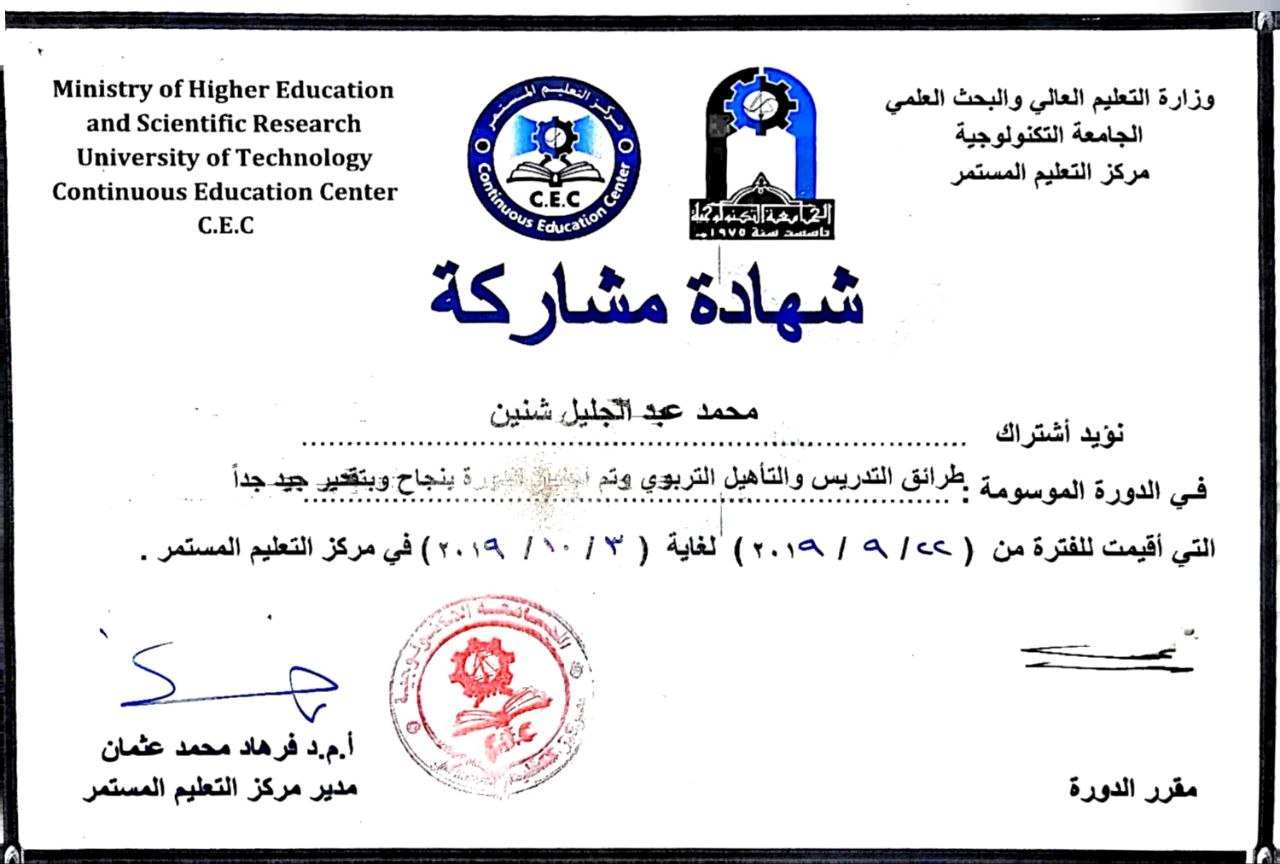
Certificate of Participation in Teaching Methods and Educational Qualification Course

Certificate of Participation in Teaching Methods and Educational Qualification Course

University of Technology - Continuous Education Center (C.E.C) (Under the auspices of the Ministry of Higher Education and Scientific Research - Iraq).

Certificate of participation issued by the Continuous Education Center at the University of Technology, certifying that Mr. Mohammed Abduljaleel Shannen successfully completed the course titled "Teaching Methods and Educational Qualification" with a grade of "Very Good", held from September 22, 2019, to October 3, 2019.